

How to harvest endive: everything you need to know
Author: Ortomec Press
Latest update: September 29, 2026
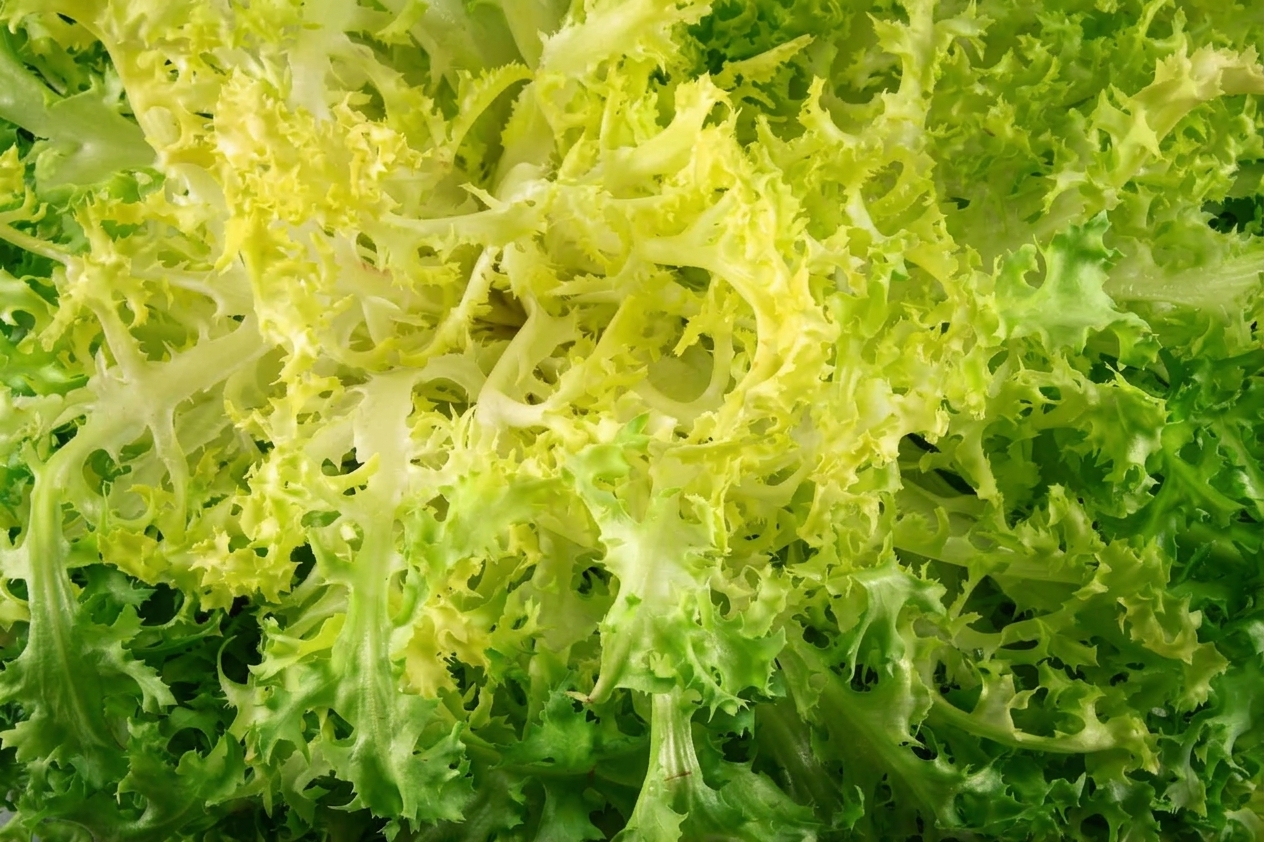
Endive is a crop of great interest to farms supplying the fresh produce market, the fresh-cut industry and large-scale retail. However, the commercial quality of the product largely depends on how the final stages of the growing cycle are managed: choosing the right harvesting time, ensuring uniform cutting, handling the crop gently and carrying out post-harvest operations quickly.
Knowing how to harvest endive professionally means harvesting when the heads have reached the characteristics required by the market, reducing waste and preserving the integrity, colour and texture of the leaves. On medium to large farms, mechanisation also makes it possible to increase harvesting capacity and work within what are often very narrow harvesting windows.
In this guide, we will look at the main types of endive, the blanching process and the best techniques for organising efficient harvesting operations, with a focus on Ortomec solutions for leafy vegetables.
Types of endive
The term endive refers to several varieties belonging mainly to the species Cichorium endivia. The characteristics of the plant, the structure of the head and its intended market can influence both the harvesting method and timing.
The main types include:
- Curly endive, characterised by finely cut, frilly leaves and an open head, widely used for the fresh produce market and packaged salads.
- Escarole, with broader, smoother and fleshier leaves, generally forming more compact heads.
- Baby leaf varieties, harvested at an earlier stage and mainly intended for the fresh-cut industry and mixed salads.
- Whole-head produce, where weight, shape, compactness and uniformity are particularly important.
For farms, it is important to know the final destination of the crop right from the field planning stage. A crop intended for baby leaf production requires different planting densities, cutting heights and harvesting methods compared with endive harvested as whole heads.
The choice of equipment must also be consistent with the commercial format. Machines used for cutting leaves need to operate precisely and gently, while whole-head harvesting requires systems capable of handling a bulkier product without causing bruising or breakage.
Blanching endive before harvesting
Blanching is a practice designed to reduce the exposure of the inner leaves to light, encouraging a paler colour and a more tender texture. It is particularly important for produce intended for the fresh market, where visual appearance, crispness and reduced bitterness can influence commercial value.
Blanching can be achieved through:
- the natural closing of the head;
- tying the outer leaves together;
- covers or systems that limit light exposure;
- selecting varieties with good self-blanching characteristics.
The process should be carried out when the plant is sufficiently developed but has not yet reached the point of overmaturity. Blanching too early can restrict head development, while prolonged blanching can increase the risk of rot, particularly in conditions of high humidity.
Before harvesting, it is therefore important to check:
- head compactness;
- colour of the inner leaves;
- presence of rot or damaged tissue;
- moisture accumulated between the leaves;
- uniformity across the field.
For professional production, blanching should be coordinated with the availability of labour, machinery and the packing line. Once the crop has reached the required characteristics, it needs to be harvested quickly to prevent quality losses.
How to harvest endive
The harvesting technique depends on the type of endive grown and the format required by the customer.
For whole-head endive, the plant is cut at the base, separating the head from the root system. The cut must be clean and correctly positioned so that the product remains compact without leaving an excessive portion of the core attached.
Professional harvesting can be divided into the following stages:
- checking the maturity level;
- assessing the health of the crop;
- adjusting the cutting height or depth;
- separating the head or leaves;
- conveying the harvested product;
- carrying out an initial selection in the field;
- quickly transferring the product to the processing facility.
The leaves should be handled as little as possible. Impacts, compression and excessive drops can cause browning, breakage and loss of crispness.
For farms managing large areas, Ortomec harvesters help make the process more uniform and repeatable. Adjustments to the cutting system allow the machine to be adapted to the characteristics of the crop, while gentle conveying helps preserve product integrity.
Mechanisation offers practical advantages:
- higher hourly harvesting capacity;
- reduced dependence on manual harvesting;
- more uniform cutting;
- less variability between operators;
- improved delivery planning;
- greater control over harvesting costs.
To achieve these results, the field needs to be prepared for mechanised harvesting. Regular rows, level ground, uniform crop density and effective weed control facilitate the passage of the harvester and improve cutting quality.
When to harvest endive
The ideal harvesting time depends on the variety, the intended market and the specifications agreed with the customer.
In general, whole-head endive is ready to harvest when it has:
- suitable size and weight for the target market;
- good compactness;
- healthy outer leaves;
- a well-developed heart that is properly blanched when required;
- no signs of bolting;
- limited damage or rot.
Harvesting too early results in lightweight, poorly developed heads. Delaying harvesting excessively, on the other hand, can lead to:
- reduced tenderness;
- an increase in damaged leaves;
- excessive opening of the head;
- greater risk of disease;
- development of the flower stalk;
- increased waste during processing.
Field conditions should also be taken into account. It is preferable to harvest when the leaves are dry, avoiding the hours immediately following rainfall or irrigation. Excessively wet produce is more difficult to handle and may present greater challenges during storage and packing.
Harvesting endive at different growth stages
Endive can be harvested at different stages of the growing cycle depending on the type of product required.
Harvesting at the baby leaf stage
For the fresh-cut market, leaves can be harvested at a young stage, before the head has fully formed.
In this case, the following factors are essential:
- uniform emergence;
- even crop height;
- precise cutting;
- avoiding soil contamination;
- gentle handling;
- immediate cooling.
Ortomec harvesters for leafy vegetables are particularly suitable for this type of operation, as they allow the cutting height to be adjusted and the product to be conveyed without subjecting it to excessive stress.
Harvesting young heads
A head harvested at an intermediate stage has a smaller size and generally more tender leaves. It may be intended for specific fresh-market segments or for products requiring uniform formats and lower weights.
The harvesting window is limited: size should be monitored frequently to avoid excessive differences between batches.
Harvesting mature heads
Harvesting at full maturity aims to achieve the weight, shape and compactness required by commercial specifications. This is the most common stage for selling whole heads.
At this stage, it is essential to avoid leaving the crop in the field for too long. The product should be harvested as soon as it reaches the required parameters, particularly in periods of high temperatures, frequent rainfall or significant phytosanitary pressure.
Having machinery with adequate working capacity makes it possible to shorten harvesting times and harvest the field more uniformly.
Conclusion
For farms supplying the fresh produce and fresh-cut markets, obtaining a uniform, intact product that meets supply chain specifications is essential.
Mechanisation therefore becomes a priority when it helps to:
- meet narrow harvesting windows;
- reduce labour costs;
- standardise cutting;
- preserve leaf quality;
- coordinate field and processing operations more accurately;
- make daily productivity more predictable.
To identify the Ortomec solution best suited to the type of endive you grow, your commercial format and your farm’s production volumes, contact us.